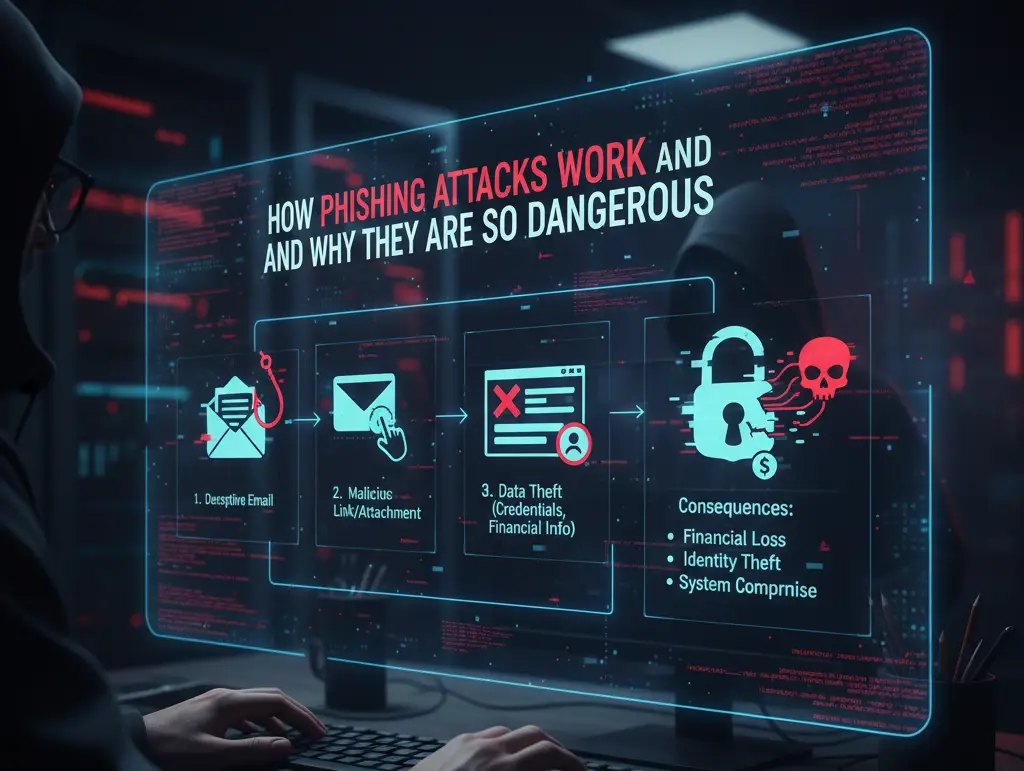
Phishing attacks are one of the most common online threats affecting both individuals and businesses. According to Cloudflare, phishing is a cybercrime where attackers impersonate trusted organizations to trick users into giving up sensitive information such as passwords, credit card numbers, or login credentials.
Phishing messages often arrive by email, text message, or fake websites that look legitimate. These messages may claim there is an urgent issue with an account, a missed delivery, or suspicious activity that requires immediate action. Once a user clicks the link or enters their information, the attacker can steal data, access accounts, or spread malware.
Cloudflare explains that phishing is especially dangerous because it relies on human error rather than technical weaknesses. Even secure systems can be compromised if a user is tricked into sharing information. This is why awareness and education are critical parts of online security.
To reduce the risk of phishing attacks, Cloudflare recommends verifying senders, avoiding unexpected links, and being cautious of urgent or threatening messages. Understanding how phishing works helps users recognize warning signs and protect their personal and business data.